
The Health Impacts of Chocolate
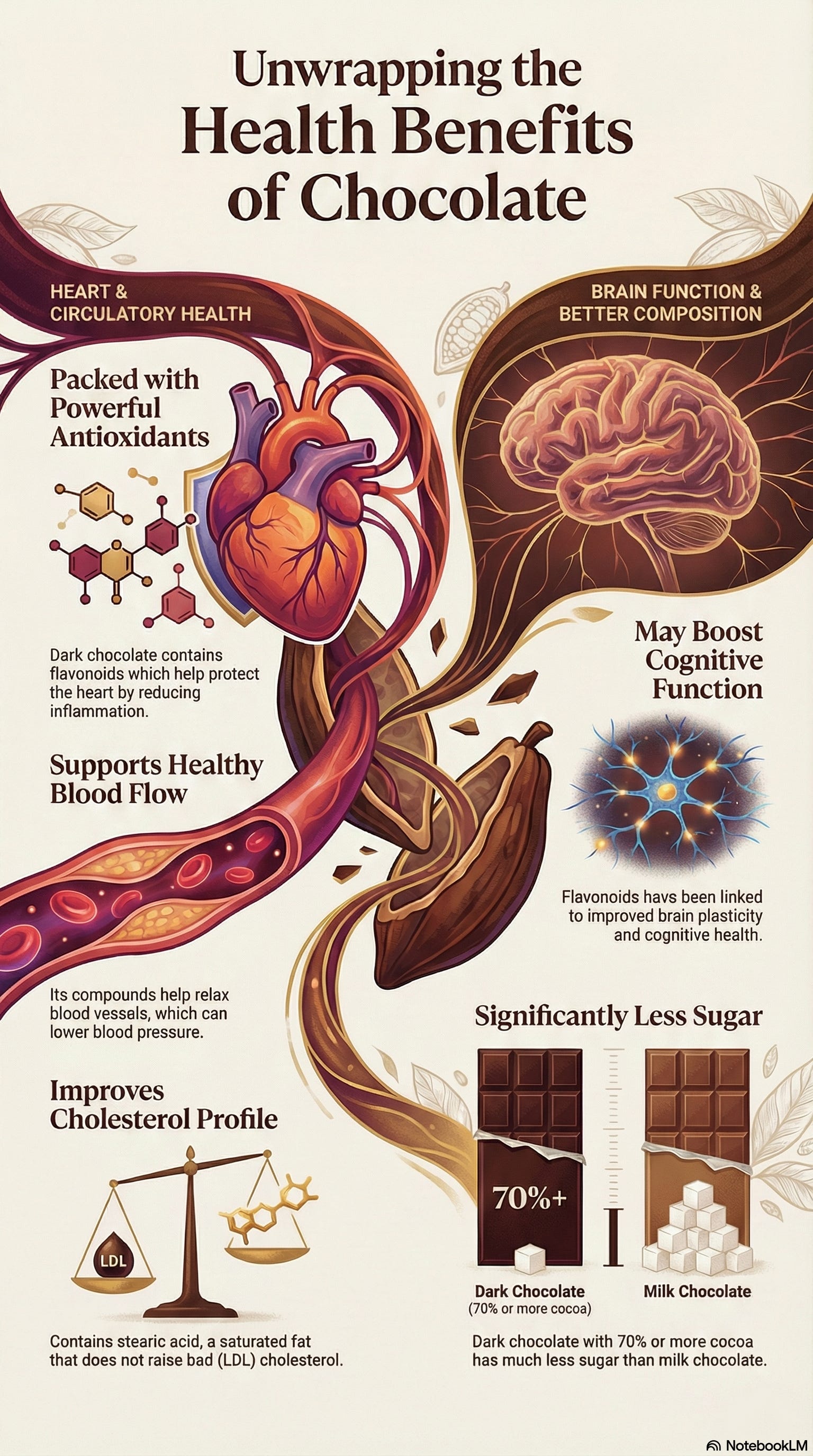
When minimally processed, chocolate delivers powerful heart-protective benefits. These come from cocoa flavanols—especially (-)-epicatechin—which support healthy blood vessels, improve circulation, and reduce cardiovascular risk.
How Cocoa Protects Your Heart
Cocoa flavanols stimulate nitric oxide production, a molecule that relaxes blood vessels and improves blood flow—essential for preventing atherosclerosis. Studies show significant improvements in vascular function after consuming high-flavanol cocoa.
Regular cocoa intake produces modest but meaningful reductions in blood pressure, particularly in people with hypertension. Even small decreases translate into lower population-level risk for heart attack and stroke.
Cocoa also reduces platelet aggregation (helping prevent dangerous blood clots), improves cholesterol balance by lowering LDL and protecting it from oxidation, and supports metabolic health by improving insulin sensitivity. Despite containing saturated fat, much of chocolate’s fat is stearic acid, which doesn’t raise cholesterol.
Long-term research is compelling: large trials and observational studies link cocoa consumption with lower cardiovascular mortality and reduced stroke risk.
The Catch: Dutching Destroys These Benefits
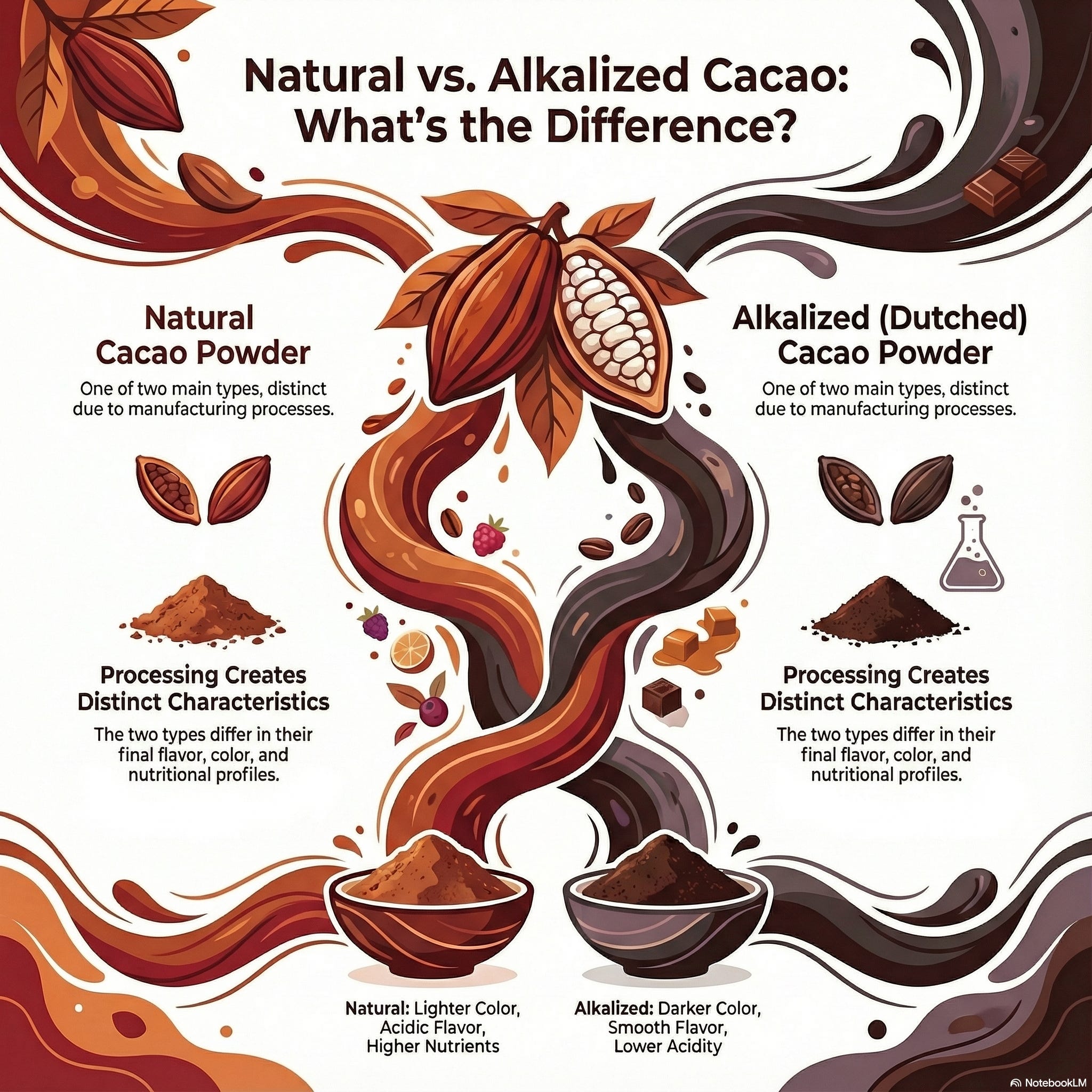
These benefits apply only to dark chocolate and high-flavanol cocoa—not heavily processed or “Dutched” chocolate, which loses most beneficial compounds.
Dutched (or alkalized) chocolate is cocoa treated with an alkaline solution, typically potassium carbonate, to make it less bitter, darker in color, and more soluble. You’ll find it in hot cocoa mixes, baked goods, chocolate syrups, and many commercial chocolate bars.
Dutching destroys 60–90% of cocoa flavanols, including (-)-epicatechin, the compounds responsible for chocolate’s heart and metabolic benefits. Dutch chocolate still tastes like chocolate, but it no longer functions as heart-supportive food.
How to Identify Dutched Chocolate:
Look for these terms on labels: “Dutch-processed”, “Alkalized cocoa”, “Processed with alkali.”
In the U.S., companies must disclose alkalization, but they’re not required to make it obvious. It usually appears in small print near the ingredients list or on the back panel—never prominently on the front. Companies can technically comply while making it nearly impossible for consumers to notice.
Choose chocolate labeled “natural cocoa” or “non-alkalized.” High-percentage dark chocolate (70% cacao or higher) from quality brands typically uses non-Dutched cocoa. If the label doesn’t mention alkalization and the company emphasizes flavanol content or heart health benefits, it’s likely non-Dutched.
Reading labels carefully is currently the only way to protect cocoa’s health benefits.
Special Note on White Chocolate
Despite its name, white chocolate offers little to no health benefits associated with chocolate. That’s because it contains no cocoa solids—the part of the cacao bean that provides flavanols, antioxidants, and cardiovascular benefits. White chocolate is made from cocoa butter, sugar, and milk solids, so it lacks the compounds that support heart, metabolic, and vascular health.
In practical terms, white chocolate functions nutritionally more like a confection or dessert fat than a functional food. While cocoa butter itself is not inherently harmful, it does not provide the flavanols associated with improved blood flow, lower blood pressure, or reduced cardiovascular risk.
If you’re choosing chocolate for health, white chocolate does not qualify—regardless of quality, sourcing, or branding.