Winter Bulbs
How to Grow Life Slowly While Everything Else is Resting

Winter is not meant to be bright, loud, or abundant.
It’s meant to be quiet, slow, and inward.
That’s why forced indoor bulbs feel so different from typical winter décor. They don’t pretend it’s spring. They don’t arrive fully formed. They ask for patience—and then reward it.
Indoor bulbs are one of the few winter rituals that still respect natural timing—no instant gratification. No disposability. Just growth, unfolding at its own pace.
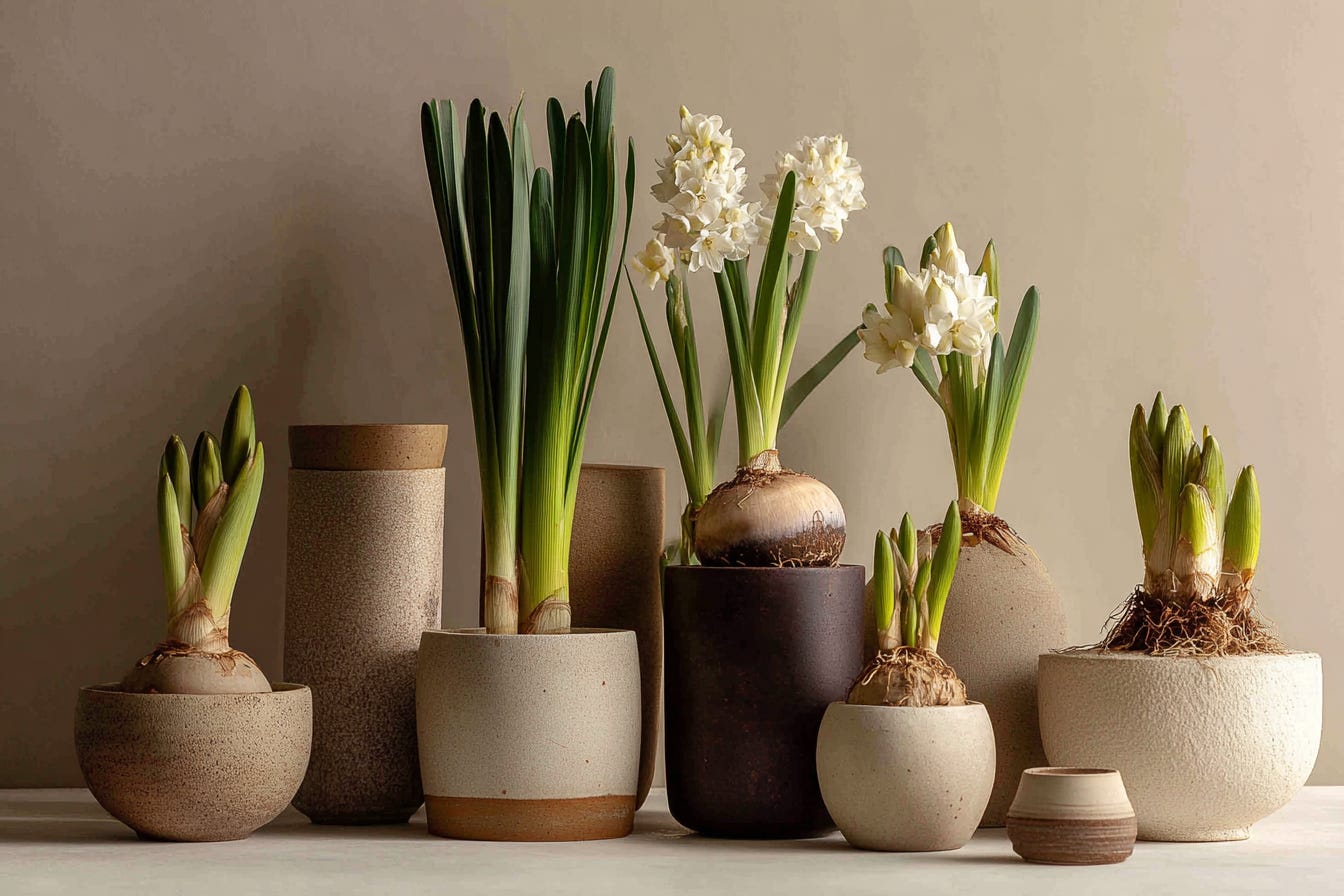
What are winter indoor (forced) bulbs?
Forced bulbs are bulbs that have experienced a cold period (naturally or artificially) and are then brought indoors to bloom during winter.
This isn’t a modern trick. It’s a centuries-old practice used in Northern climates to bring a small amount of life indoors during the darkest months—without forcing abundance where it doesn’t belong.
They bloom once. Slowly. Intentionally. And then rest.
Why indoor bulbs belong in winter (not spring)
Winter bulbs:
Respect low light and cold air
Grow slowly, not explosively
Require very little input
Offer presence instead of performance
Unlike store-bought bouquets, bulbs:
Aren’t disposable
Don’t require constant replacement
Don’t rely on long-distance shipping
Don’t overwhelm your nervous system
They’re alive—but not demanding.
The best winter indoor bulbs
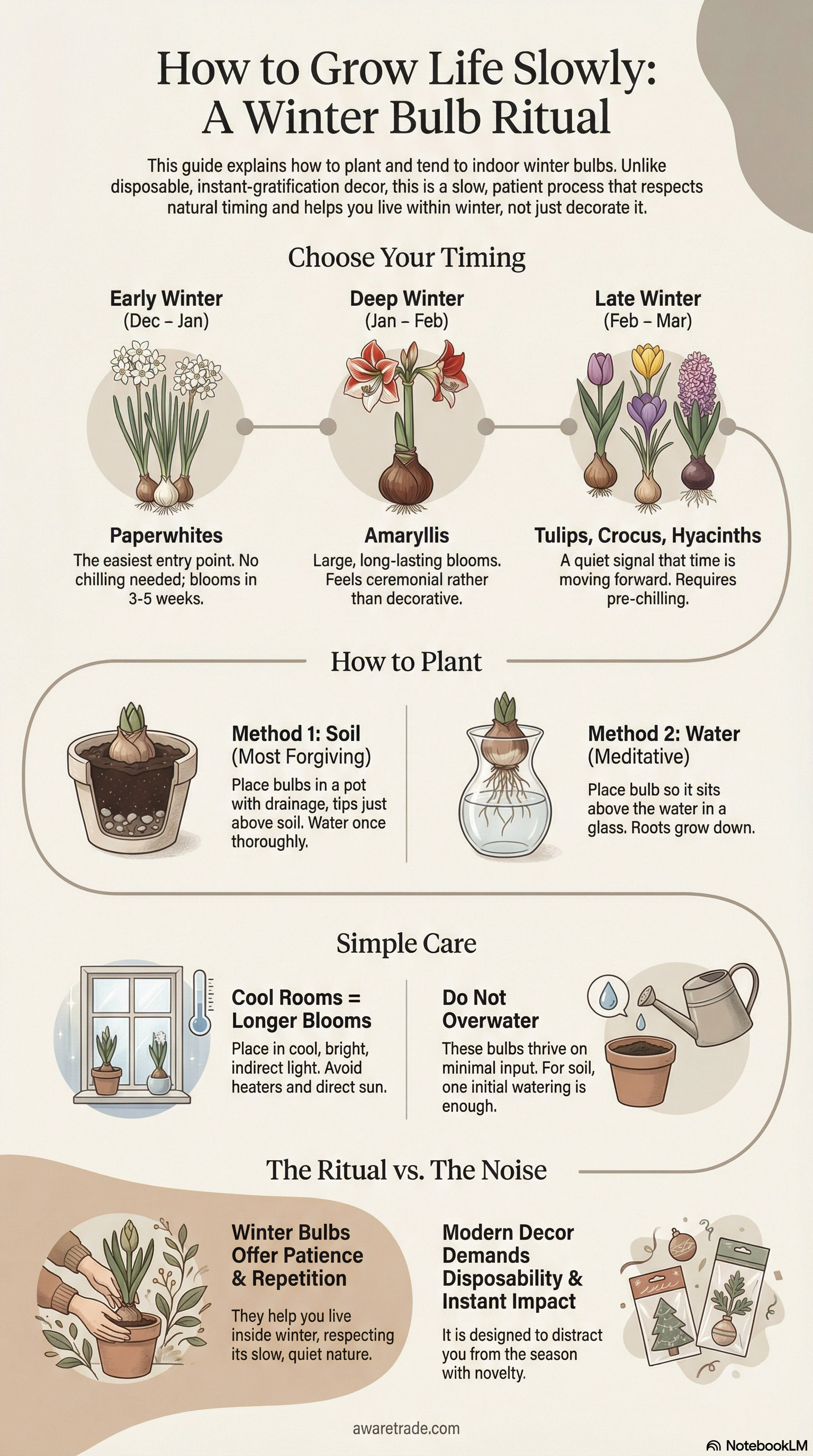
Here’s a list of the top winter indoor bulbs and when to plant them.
Paperwhites (Narcissus)
Best for: Early winter (December–January)
No chilling required
Plant anytime from November to January
Bloom in 3–5 weeks
Why they’re perfect: They’re the easiest entry point—minimal effort, reliable blooms, deeply winter-coded.
Planting window: Late fall through mid-winter
Amaryllis
Best for: Deep winter (January–February)
No chilling required
Large, architectural blooms
Long-lasting
Why they work: One bulb can bloom for weeks and feels ceremonial rather than decorative.
Planting window: November–January (blooms 6–10 weeks later)
Hyacinths
Best for: Mid-winter
Usually pre-chilled
Strong fragrance
Compact and nostalgic
Why they work: They bring scent and memory into dark rooms—but use sparingly.
Planting window: Late fall–early winter (after chilling)
Tulips, Crocus, Muscari
Best for: Late winter → early spring (February–March)
Require chilling (12–14 weeks)
Subtle, hopeful blooms
Shorter indoor lifespan
Planting window: Chill in fall → plant indoors mid-winter. These are the bridge bulbs—quiet signals that time is moving forward.
What happens after blooming?
Here’s the honest answer (and the anti-corporate one):
Paperwhites: usually composted after bloom
Amaryllis: can be kept and rebloomed with care
Tulips & others: may be planted outdoors if the climate allows
Not everything is meant to be reused endlessly. Some rituals are seasonal by design.
Why this matters (more than plants)
Modern winter décor is built on:
disposability
instant impact
novelty cycles
Indoor bulbs offer the opposite:
patience
repetition
seasonal truth
They don’t distract you from winter.
They help you live inside it.
One last thought
Growth doesn’t need to be fast to be real.
Sometimes the most nourishing thing you can do in winter is wait—and watch something unfold.